Swim Safe Now® lessons are highly individualized and grounded in behavioral science principles, including sensorimotor learning, operant conditioning, and positive reinforcement. Each lesson is customized to your child’s developmental level to build real, lasting skills.
Every child comes to swim lessons with different strengths, experiences, and comfort levels. Swim Safe Now® lessons are thoughtfully customized to meet each child where they are, while following a proven framework that builds confidence, independence, and water safety through intentional, skill-based instruction.
Below is an overview of how skills typically progress by age and developmental stage, so families know what to expect as their child moves through lessons.
INFANT LESSONS (6–12+ months)
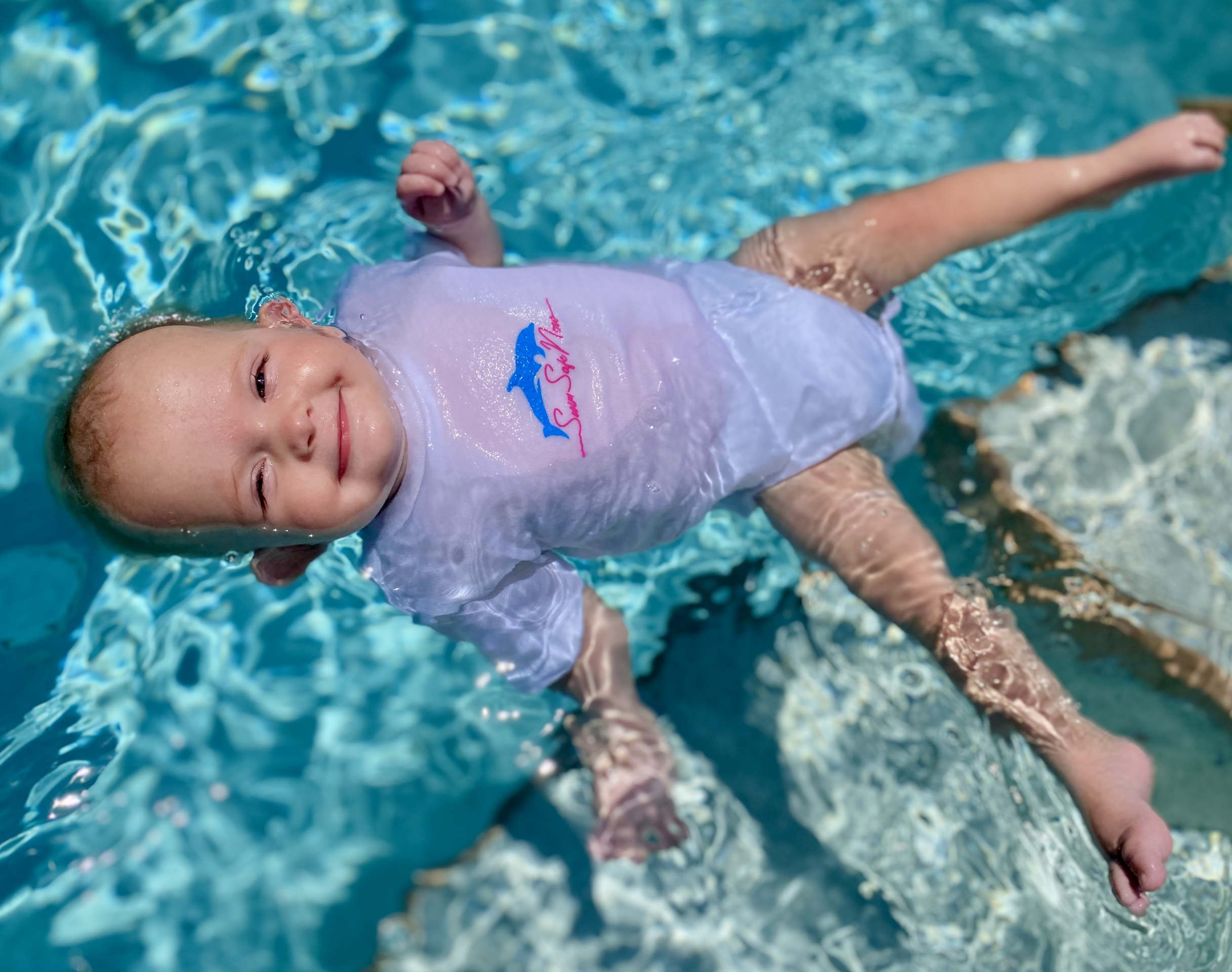
Infant Rollback to Float
Babies who are sitting independently and beginning to crawl learn how to hold thier breath underwater, roll onto their back to float, rest, and breathe until rescued. The infant rollback-to-float sequence typically takes about 6 weeks to master. Infants must be at least 6 months old, sitting up independently, and crawling.
Why Rollback to Float? Infants who are not yet walking do not have the strength or coordination needed for purposeful forward swimming. Instead of trying to push babies to “swim”, lessons focus on teaching a reliable rollback-to-float so they can rest, breathe, and stay safe if they enter the water unexpectedly.
Toddlers (Walking – 2 years)
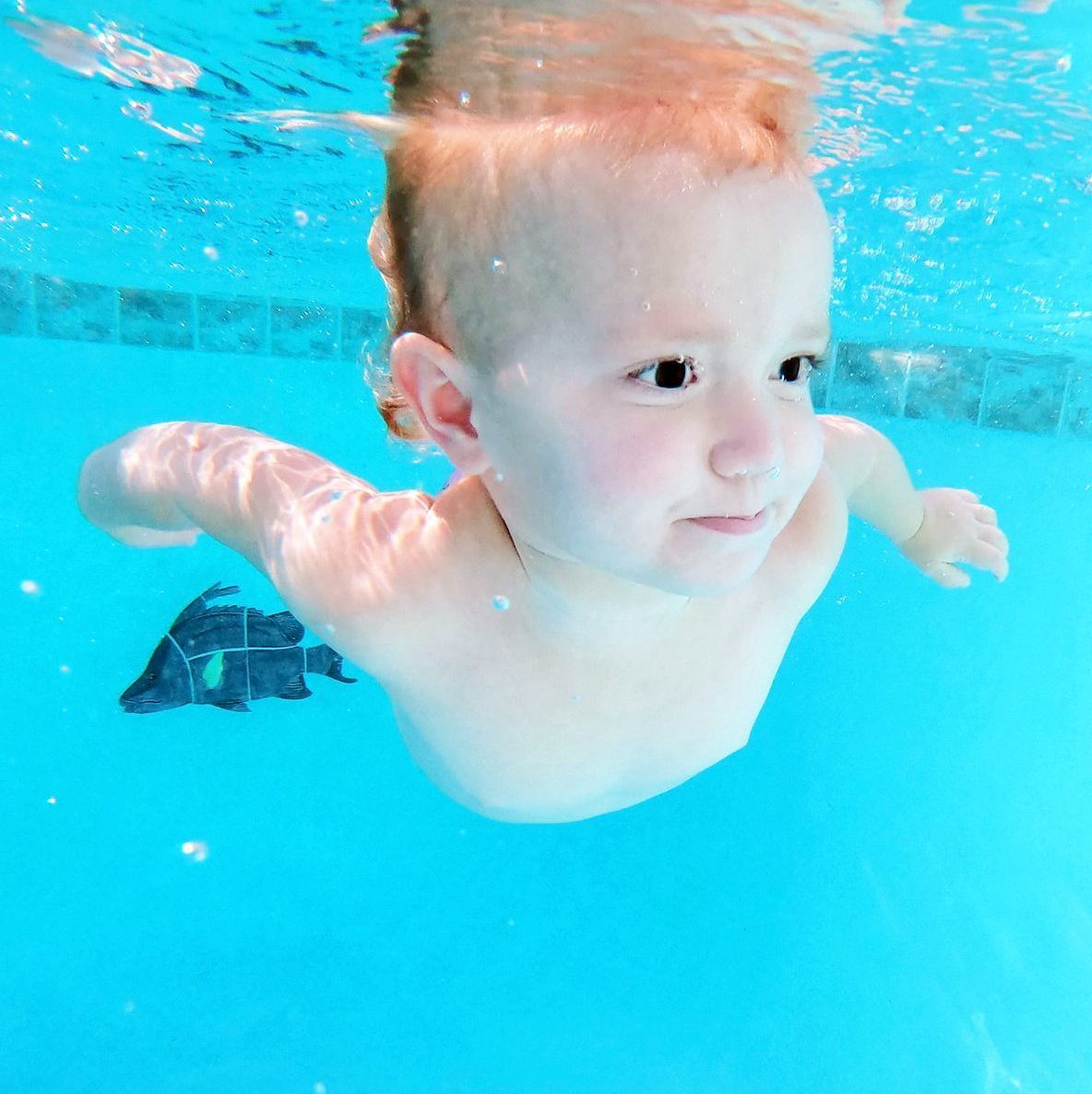
(Foundations) Swim-Float-Swim
Toddlers learn breath control, independent swimming with their face in the water, back floating for rest and breathing, and the foundation for swim → float → swim.
Most children are ready to begin this progression once they are walking — but readiness involves more than age alone.
Between 12–24 months, balance, coordination, and confidence can vary widely. Some children are ready to continue swimming between floats, while others benefit from swimming a shorter distance and remaining in a back float longer before adding additional sequencing.
Your instructor will guide when your child is ready to continue swimming after the float, ensuring progress is safe, appropriate, and confidence-building. Most new students master these foundational skills within approximately 6–8 weeks.
Preschool (Ages 3-4 Years)
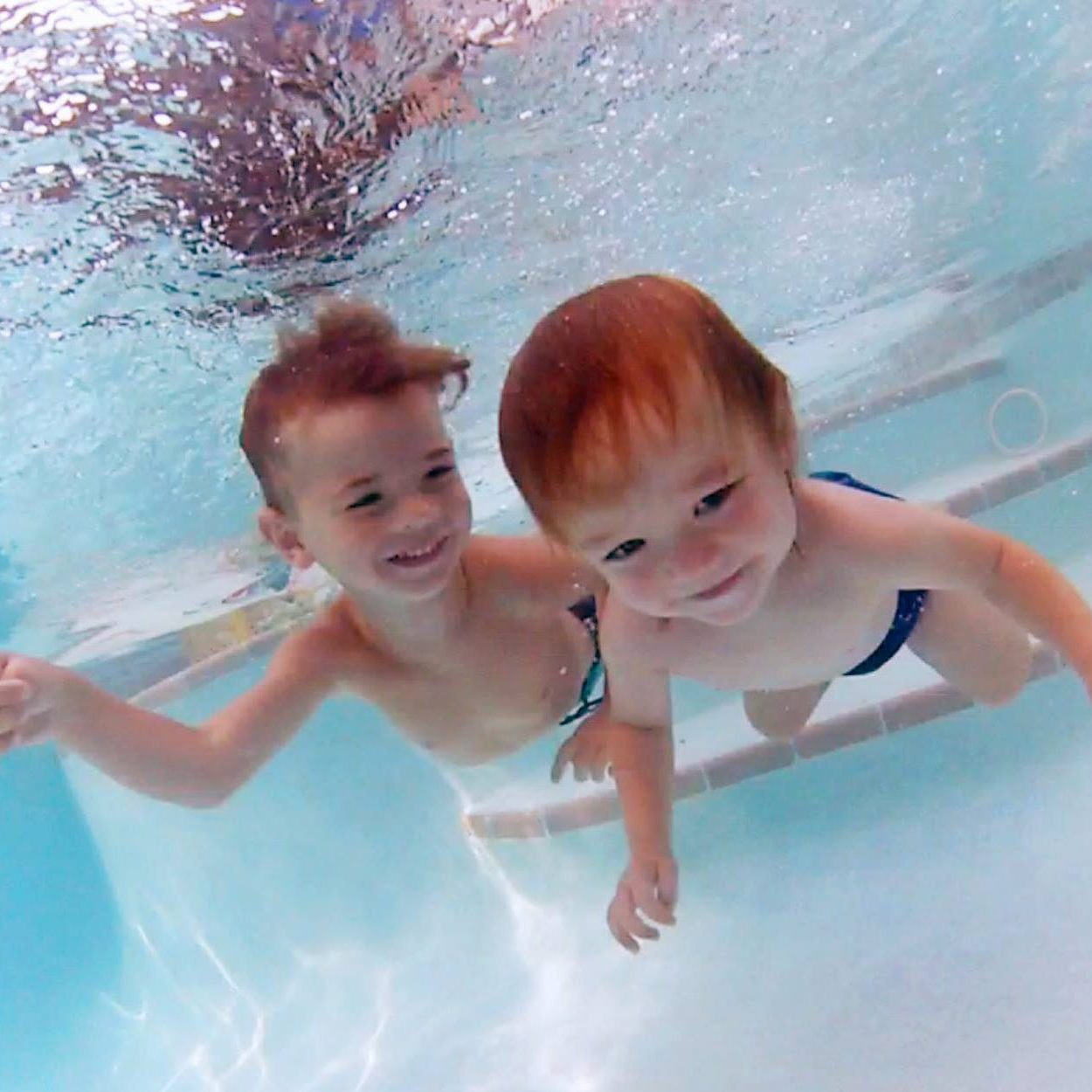
Swim-Float-Swim
Children in this age group work toward strong, independent, safety-focused skills that build confidence and control in the water. Instruction emphasizes breath control, swimming with the face in the water, productive movements, and floating independently on the back for rest and recovery. As these skills strengthen, children work toward mastering the swim → float → swim sequence. Most new students master these skills within approximately 6–8 weeks.
Why Swim-Float-Swim? This is the safest and most energy-efficient way for new swimmers to breathe, rest, and remain independent in the water. Rather than relying on lifting the head to breathe or attempting to tread water, children learn to pause, float, recover, and then continue swimming. Because young children are not developmentally built for prolonged head-up swimming or sustained treading, this approach helps prevent rapid fatigue and supports better control and safety in the water.
Children Ages 5+
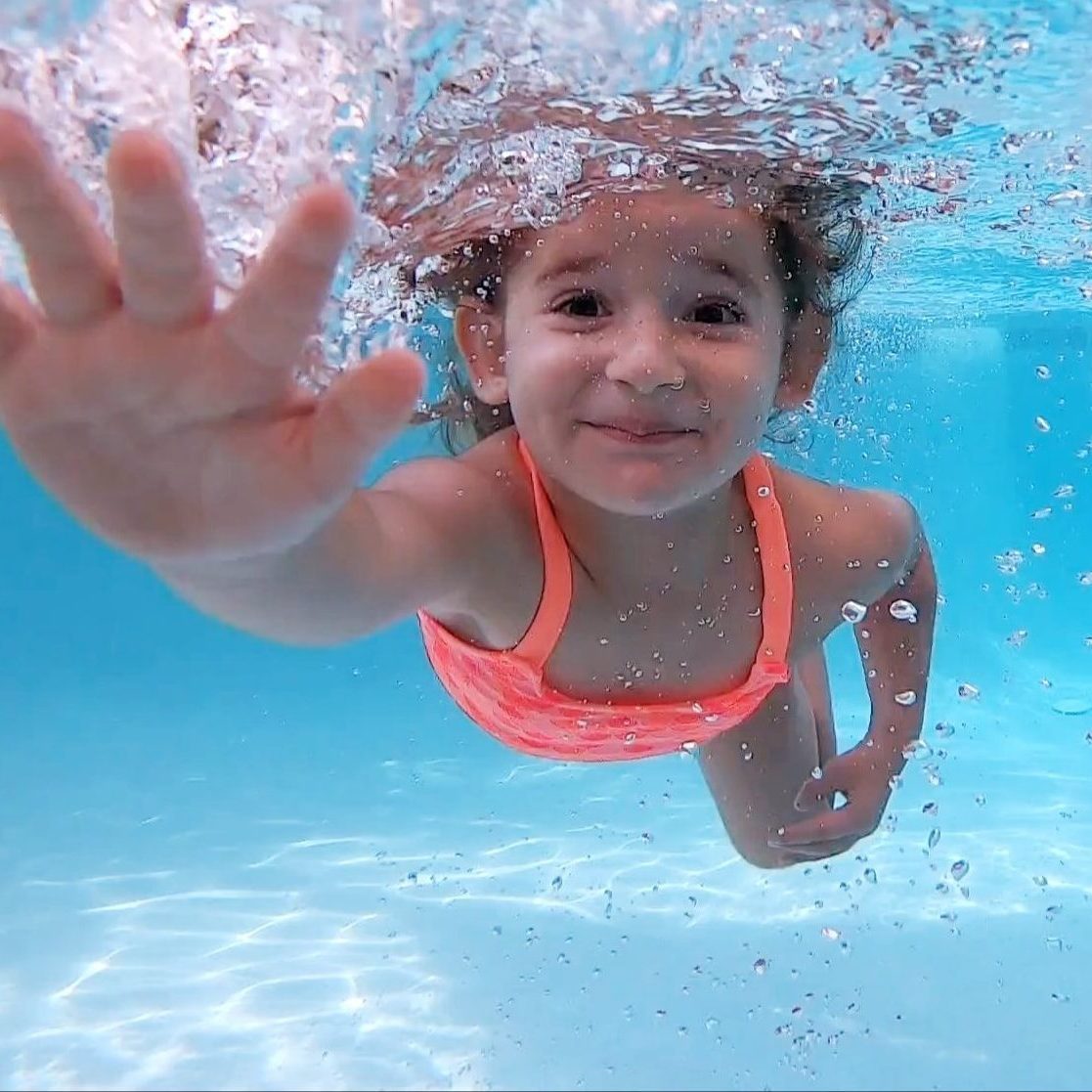
Swim-Float-Swim
Children ages 5 and up build strong, independent, safety-focused skills with an emphasis on confidence, control, and stamina in the water. Instruction reinforces breath control, efficient body position & coordinated movement, independent back floating for rest and recovery, and reliable
swim → float → swim sequencing. These foundational skills ensure children can manage their breathing, energy, and movement safely in a variety of situations.
Once swim-float-swim is mastered and performed consistently, introductory stroke work may be added. Stroke instruction is introduced gradually and intentionally, building on the strong foundation already in place rather than replacing it. This approach helps children develop better technique, endurance, and confidence while maintaining safety and independence as the priority.
*Formal stroke refinement and swim team preparation typically continue beyond this stage and may be referred to dedicated stroke or swim team coaches when appropriate.
Refresher & Progression Lessons
Children can begin Swim Safe Now® lessons at any age and continue with periodic refresher or progression lessons as they grow. These sessions are designed to reinforce previously learned skills, rebuild confidence after time away, and advance children to the next level of independence and safety in the water. Refresher and progression lessons allow instructors to assess skill retention, fine-tune technique, and introduce more advanced skills as a child’s strength, coordination, and maturity increase.
Maintenance Lessons
Some families choose to continue lessons at their child’s current level by scheduling weekly or biweekly maintenance sessions. These lessons help keep skills sharp, reinforce confidence, and support long-term retention as children grow and develop.
Ready to take the next step for your child?
Learn more about lesson availability in your area, or explore how our lessons are structured to support each stage of progression.